

Cultural Diversity Of India Drawing
Indian Folk-art: An Expression of Cultural Diversity
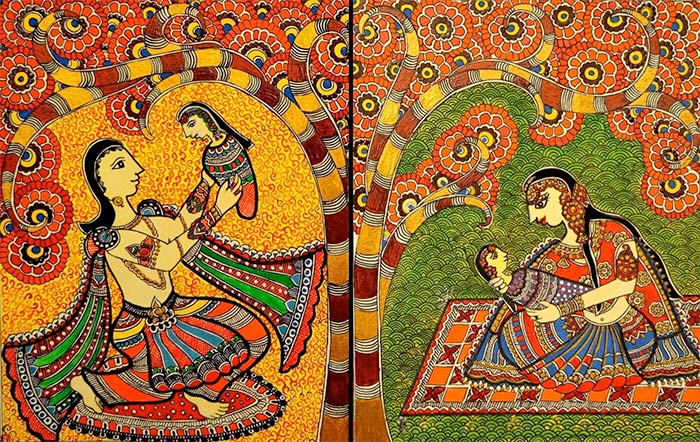
India is a religious and ethnically diverse country. Indian culture is characterized by distinct languages, and rich traditions among various ethnic and religious groups. Despite hosting a Hindu-majority it is difficult to attach a singular and unifying notion of identity to Indian culture. This is in part due to the flexible nature of the Hindu religion which allows for the aggregation of numerous regional cultures, and ethnic practices to grow and flourish. The folk and tribal arts of India express the cultural diversity of the nation and provide a window through which one can explore the rich heritage of Indian culture. 1
What is Folk-art?
Folk-art as a visual medium does not have a unique definition but generally consists of all forms of visual art delivered in the context of an existent society within a particular geographical and cultural niche. In this manner, folk-art caters to local tastes and needs, is reflective of the way of life and culture in a community, and provides tangible and intangible forms of art with distinctive styles and objects that stand removed from other cultural developments of their time. 2 3
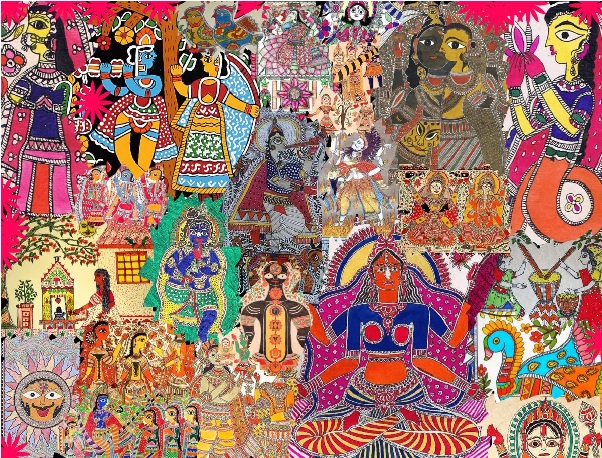
Intangible folk-art forms include music, dance, and narrative structures, while tangible folk-art forms refer to objects that are crafted by hand or other means within the traditional practices of a community. The purpose of folk-art is to serve as a medium through which a community's traditions, beliefs, and attitudes can be transmitted and passed from one generation to another. This is often achieved within families and community via practical demonstrations, conversation, and daily practice. 4
Folk-art was developed to address the very real needs, and desires of a community. Once that need is removed, the relevant folk-art may gradually vanish within the annals of history thanks to decreased transmission and communication of its existence within the community. 5
Indian Folk-Art
Folk-art in India manifests in various forms including pottery, painting, paper-art, weaving, sculpting, metallurgy, and object design involving jewelry and toys. Relevant objects can include masks that are used in religious rituals and ceremonies, paintings, textiles, baskets, kitchen utensils, arms and weapons, religious sculptures (idols) etc. It is also common to have the human body serve as a platform for folk-art via the practices of piercings and tattoos during festivals and religious celebrations.
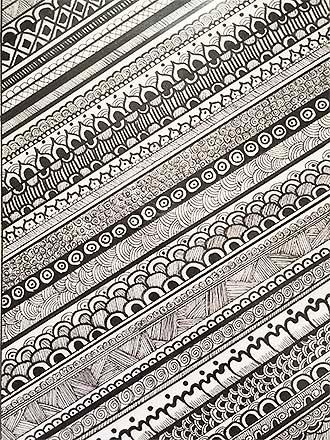
Folk-art products each have a symbolic meaning that is attached to them as well as the materials and techniques used to fabricate them. Easily recognizable forms of Indian folk-art include the dazzling sculptures and paintings of puranic gods and mythological figures of Hinduism often sold and displayed in temples, fairs, festivals, and city districts as well as in local households.
The Indian folk-arts have also served as a medium of expression for the cultures of nomadic tribes and ethnic groups within the country. The relevant art forms express the transient and dynamic patterns of lifestyles said communities have experienced while traveling across India. 6
Over the course of Indian history, the various folk-art forms of the nation have been protected and survived under the umbrella of religious and ethnic traditions revolving around familial beliefs, and daily practices. Unfortunately, globalization has resulted in the development of a synthetic macro-culture that has led to the gradual attrition of Indian folk-art. Thus, tremendous efforts have been undertaken by the government of India alongside various NGOs to preserve and protect these arts and to promote them. 7 8
In this article, we will consider five of the most popular and widely recognizable folk-art forms of India that have survived the passage of time.
Thanjavur Art
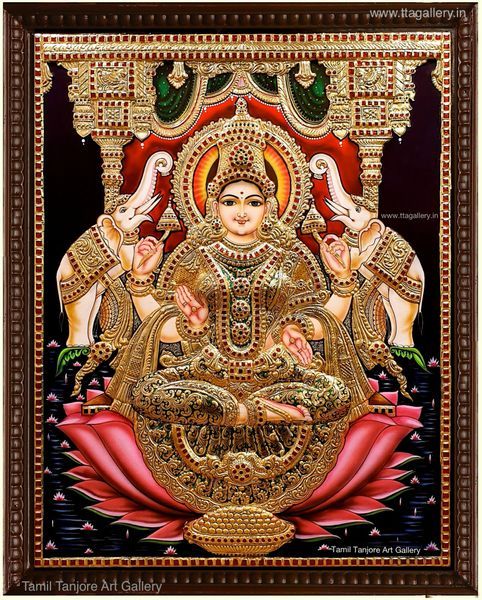
Tanjore or Thanjavur paintings originate from the South Indian state of Tamil Nadu, in the city of Thanjavur, about 300 km from the state's capital city of Chennai. These paintings are essentially "religious paintings with a royal heritage" and are among the greatest traditional art forms noted worldwide. 9
The subject matter of these paintings largely revolve around mythological themes from Hinduism and demonstrate spirituality within the essence of creative art. Once adorning the royal dwelling of the Hindu rulers of Vijayanagar Rayas and Thanjavur Nayaks in the 16th century, these paintings can now be commonly found in every household with figures of Lord Krishna in various poses and depictions of his life being the most popular.
Thanjavur paintings are characterized by remarkable gold leaf work, brilliant color schemes, decorative jewelry with stones and cut glass. The paintings used to be adorned with rubies, diamonds and other precious gemstones, but nowadays, semi-precious stones are used in their place while the practice of using gold foil hasn't been altered. The paintings are made such that the shine and glean of the gold leaves used last forever. 10
Madhubani Painting
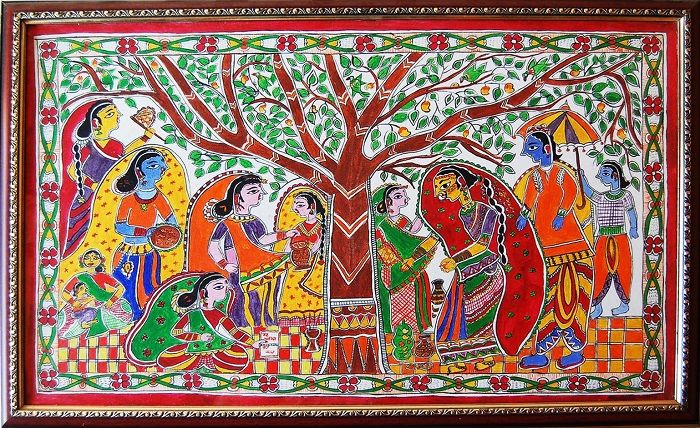
Also referred to as the art of Mithila, Madhubani paintings are said to originate from the kingdom of Janaka, who was the father of Sita in the much beloved Hindu epic Ramayana, in Nepal and in present-day Bihar. 11
The paintings are produced using mineral pigments prepared by the artists and were traditionally drawn on freshly plastered mud walls. For commercial purposes, the same has now been achieved on paper, cloth, canvas, and other media.
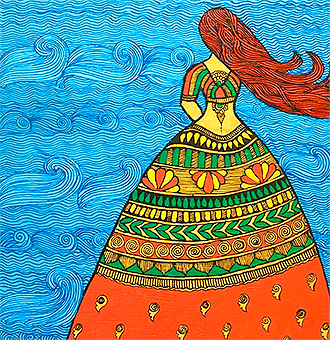
The method involves using cotton wrapped around a bamboo stick as the brush. Black color is obtained by mixing soot with cow dung, yellow from turmeric or pollen or lime and the milk of banyan leaves, blue from indigo, red from the kusum flower juice (from the Ceylon Oak tree) or red sandalwood, green from the leaves of apple trees, white from rice powder, and orange from palasha flowers.
The art form is characterized by geometric patterns and mostly depict scenes gods, weddings, flora, and fauna. Madhubani paintings are widely practiced by women as a means to cultivate their spirituality and yearning to be one with God. In fact, the All India Handicrafts Board and the Government of India have encouraged female artists to produce said paintings on handmade paper for commercial sale. In this manner, the Madhubani paintings have become a primary source of income for many families. The paintings now serve as a tribute to the original women of Mithila who first developed the techniques of said wall paintings. 12
Warli Painting
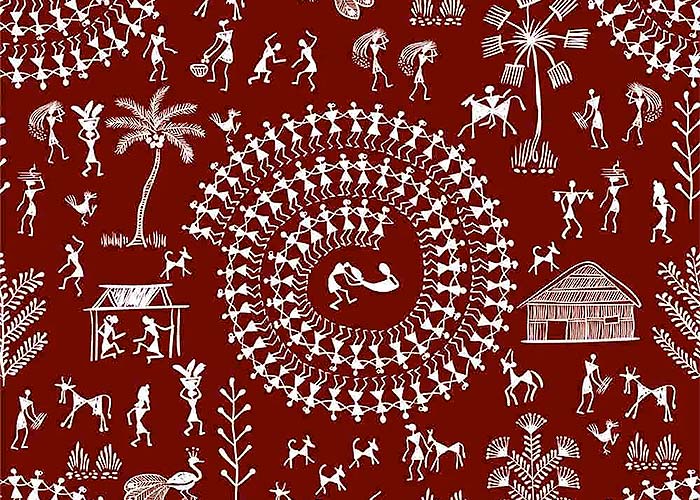
Warli is one of the oldest art forms of India and originates from the Warli tribe found on the northern outskirts of Mumbai in Western India. Despite their close proximity to one of the largest metropolitan cities in India, Warli culture is distinct in shunning all influences of modern urbanization. 13
Warli tribal art is representative of this attitude and mainly uses geometric structures such as circles, triangles, and squares to depict daily and social events of the Warli tribe. Compared to the Madhubani paintings, Warli art is quite simple. The paintings are often done on a red ochre or dark background, while the shapes are white in color. This color is obtained from the grounding of rice into white powder. 14
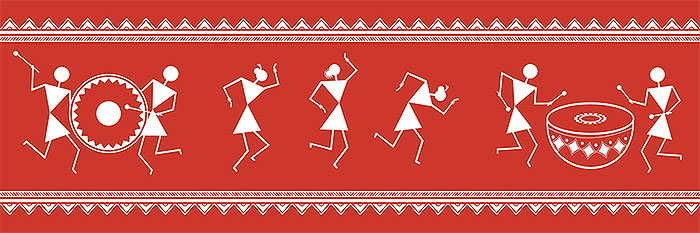
Humans are represented by a circle and two triangles, and through the paintings the Warli believe they can invoke the powers of their gods of worship. Altogether, the paintings are reminiscent of prehistoric cave paintings in execution and depict human figures engaged in hunting, dancing, sowing, and harvesting. The paintings are traditionally done in the homes of the Warlis and have served as a means of transmitting stories and traditions to a populace not acquainted with the written word. Warli paintings on paper have now become very popular and are sold all over India. 15
Pattachitra Painting
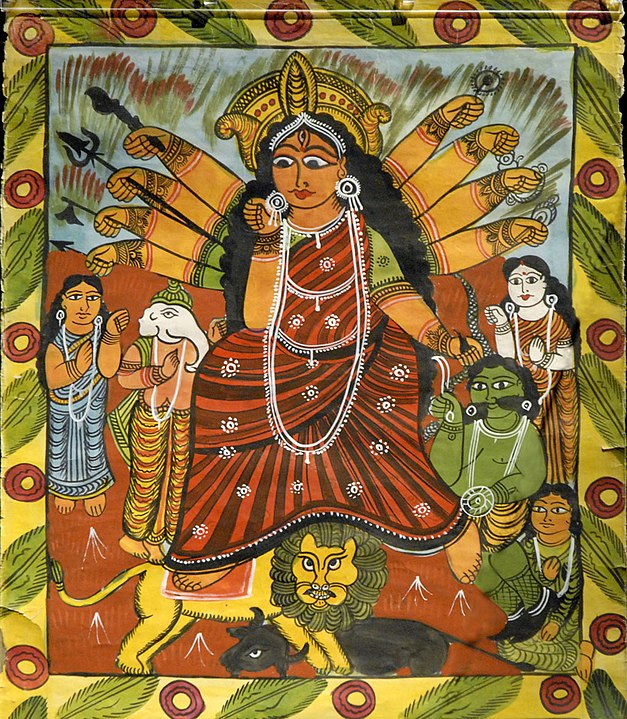
An east-Indian counterpart to the Warli as one of the oldest and most popular art forms of India, we find Pattachitra paintings from Odisha. The word Pattachitra is a combination of the Sanskrit words patta (canvas), and chitra (picture), and is basically a canvas painting.
The preparation of the canvas is among the most important aspects of a pattachitra painting. The painters, also called chitrakars, achieve this by preparing tamarind paste (by soaking tamarind seeds in water for three days). The seeds are crushed, and heated in an earthen pot to turn into a paste or niryas kalpa. The paste is used to hold two pieces of cloth together with it, and coated with a soft clay stone powder to keep it firm.
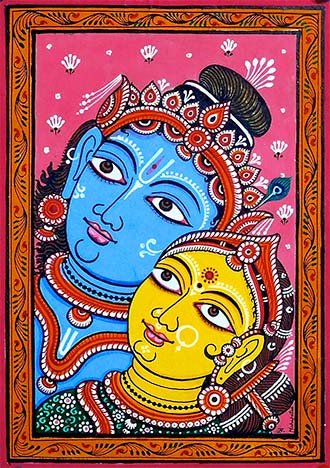
Once the cloth has become dry, it is polished with a rough stone and the surface is made smooth to become a canvas upon which the painting is made. The paints for the pattachitra originate from the gum of the kaitha tree which serves as the primary base for the various pigments to be generated. Powdered conch shells are used to make white pigments while lamp soot is used for black pigments. The root of the keya plant serves as a course brush, while mouse hair attached to wooden handles serve as finer brushes.
Pattachitra paintings are popular sources of representation of the ten avatars of Lord Vishnu, the Krishna Lila – where Vishnu's avatar Krishna displayed his powers, and the depiction of Lord Ganesh as a five-headed deity. Nowadays, pattachitra paintings have also been made on other media including tussar silk and palm leaves, and are frequently used as wall hangings and showpieces. 16
Kalamezhuthu
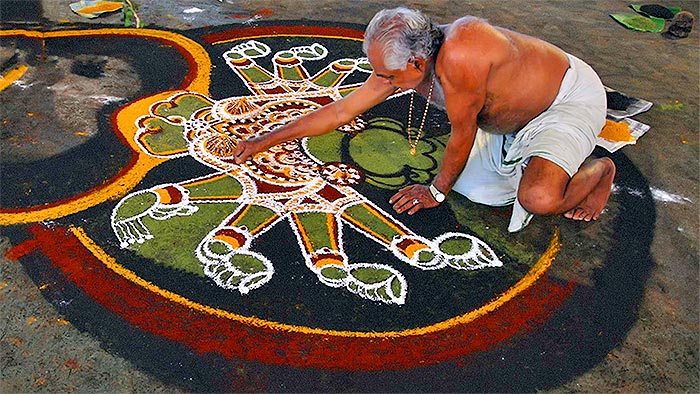
Last, but not least, the Kalamezhuthu comprises a form of folk-art that is among the most recognizable of Indian folk art. Popular variants or counterparts to the Kalamezhuthu include the Rangoli and Kolam or mandalas observed in the domestic routines of Hindu and Indian households in general to draw patterns at the doorstep and courtyard to welcome a deity into the house. 17
Kalamezhuthu specifically comprise of the tradition of drawings found at the entrances of homes and temples. This folk-art form is unique to the south Indian state of Kerala and is practiced in temples and sacred groves where the representations of Hindu deities are made on the floor. The drawings are made using natural pigments and powders of five colors (white, black, yellow, red, and green) and are done with bare hands without the use of tools.
The beautiful patterns are drawn from the center and grow outwards. Lighted oil lamps are often utilized at strategic positions of the patterns to brighten the colors. The patterns themselves are decided in observance with strict religious rules and unlike in rangoli and kolam are rarely made by the choice of artist.
The completion of the Kalam is accompanied by the singing of ritual songs in worship of the deity that is being celebrated. The songs themselves are part of an oral tradition with the rituals being performed by the artists themselves in a folk-art form that combines tangible and intangible media. Upon completion of the rituals, the "kalam" is immediately erased. 18
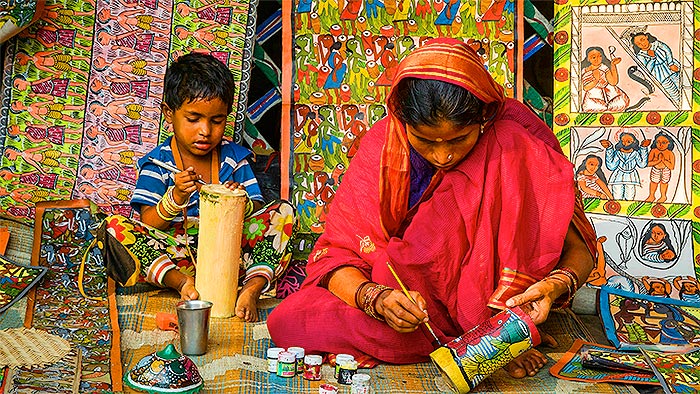
Indian folk-art abounds in expression of the country's rich heritage. Indian art forms are diverse and exquisite in nature but also explicit in their use as a media of communicating ancient oral traditions. With 29 states and 7 union territories, each with their own distinct cultural and traditional identities, India boasts a collage of folk art forms that speak volumes about the country's diverse cultural identity that is rooted in the daily lives of its people.
What do you think? Leave a comment.
Receive our weekly newsletter:
Cultural Diversity Of India Drawing
Source: https://the-artifice.com/indian-folk-art/
Posted by: whisleroulty1966.blogspot.com
0 Response to "Cultural Diversity Of India Drawing"
Post a Comment